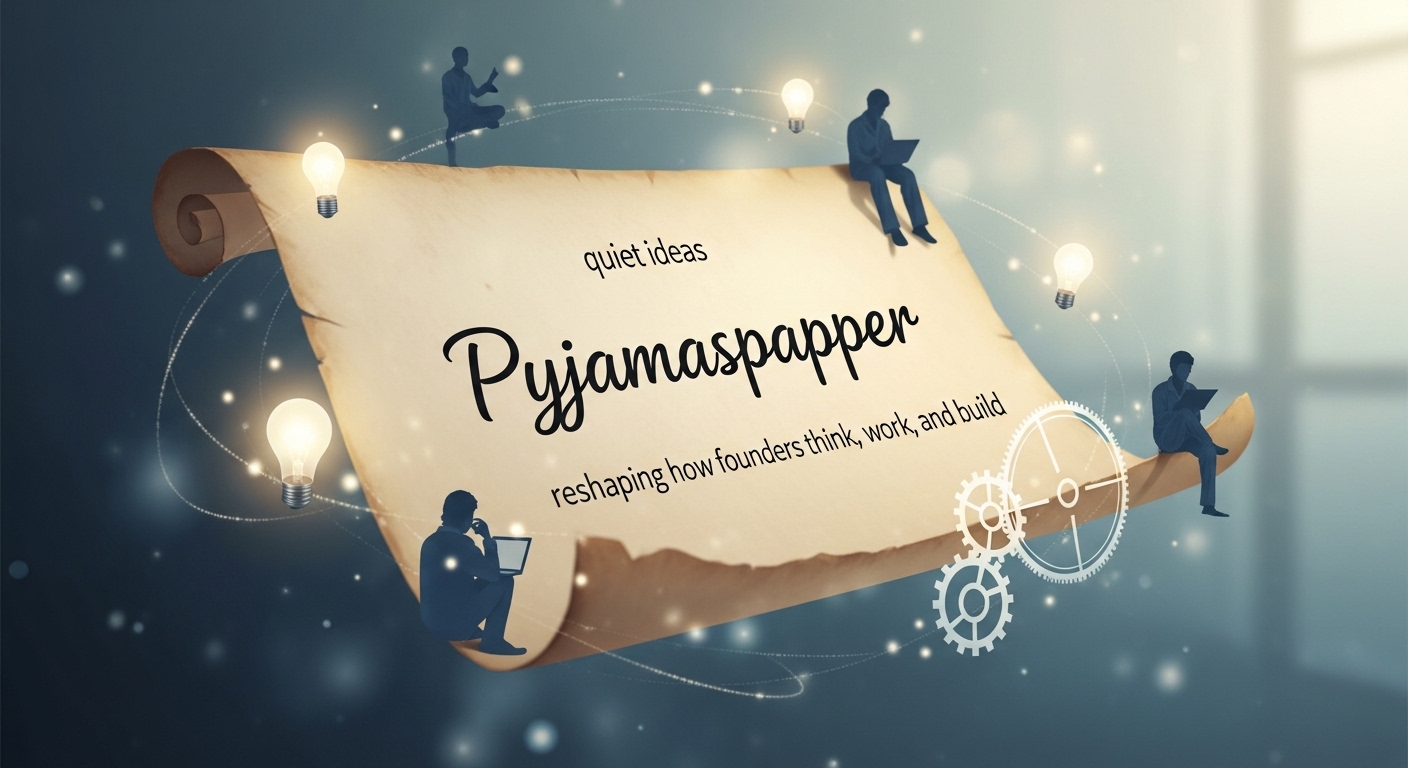
It often begins in silence. A late night, a cup of coffee gone cold, and a single sheet of paper resting on a desk at home. No office lights, no rigid schedules, no pressure to perform for anyone watching. Just ideas, raw and unfinished. This moment captures the essence of pyjamaspapper, a concept that reflects how today’s entrepreneurs and thinkers create their best work outside traditional structures. It is not about laziness or shortcuts, but about clarity, comfort, and intentional focus.
Pyjamaspapper represents a shift in mindset rather than a product or tool. It symbolizes working in your most natural state, where thinking flows freely and ideas are shaped without unnecessary friction. For founders, creators, and tech readers navigating constant noise, this idea has become surprisingly powerful.
Understanding Pyjamaspapper in a Modern Context
At its core, pyjamaspapper blends two contrasting ideas: informality and seriousness. The comfort of working in relaxed settings meets the discipline of writing things down, structuring thoughts, and making decisions visible. This balance mirrors how modern work has evolved. Offices are no longer the sole centers of innovation, and productivity is no longer measured by hours spent at a desk.
Pyjamaspapper is about respecting the mental environment in which ideas are born. Many founders report that their most valuable insights appear when pressure is removed. By embracing a calmer, more personal workflow, they often reach conclusions faster and with greater confidence. The concept resonates especially in remote-first cultures where autonomy and trust drive performance.
Why Pyjamaspapper Appeals to Entrepreneurs and Founders
Entrepreneurs live in uncertainty. Decisions are frequent, stakes are high, and clarity is often scarce. Pyjamaspapper offers a psychological anchor. Writing ideas down in a relaxed state reduces cognitive overload and creates space for deeper thinking. Instead of reacting, founders can reflect.
This approach also aligns with how early-stage ideas actually form. Rarely do breakthrough concepts emerge from formal meetings or rigid frameworks. They appear during quiet moments when the mind connects patterns freely. Pyjamaspapper legitimizes those moments and encourages founders to capture them intentionally.
The Role of Environment in Creative and Strategic Thinking
Environment shapes behavior more than most people realize. Traditional offices signal urgency, hierarchy, and performance. While useful for execution, they are not always ideal for exploration. Pyjamaspapper thrives in environments that signal safety and openness. A home workspace, a quiet room, or even a notebook beside the bed can become strategic assets.
By lowering external pressure, the mind reallocates energy toward problem-solving rather than self-monitoring. This is especially relevant for tech readers and founders who constantly switch between big-picture vision and technical detail. Pyjamaspapper allows these modes to coexist without conflict.
Pyjamaspapper as a Bridge Between Ideas and Action
One of the most misunderstood aspects of pyjamaspapper is the assumption that it stops at thinking. In reality, it functions as a bridge. Writing ideas down in their earliest form makes them tangible. Once visible, they can be tested, refined, or discarded.
This process reduces emotional attachment to ideas. When thoughts remain abstract, they feel personal and fragile. When written on paper, they become objects that can be improved. Pyjamaspapper encourages founders to externalize thinking early, which often leads to better execution later.
Practical Ways Pyjamaspapper Shows Up in Real Work
Although pyjamaspapper is a mindset, it manifests in practical habits. Some founders use it during early mornings before communication begins. Others rely on it at night when distractions fade. The common thread is intentional isolation paired with documentation.
Below is a simple comparison showing how pyjamaspapper contrasts with traditional work modes:
| Aspect | Traditional Work Mode | Pyjamaspapper Approach |
|---|---|---|
| Environment | Office or formal setup | Comfortable, personal space |
| Mental State | Performance-driven | Reflection-driven |
| Idea Capture | Structured tools | Simple paper or notes |
| Decision Style | Reactive | Thoughtful and deliberate |
| Creativity | Scheduled | Naturally occurring |
This contrast highlights why pyjamaspapper feels refreshing rather than disruptive.
The Psychological Advantage of Writing Things Down
Neuroscience consistently shows that writing by hand or slowing down thought improves understanding. Pyjamaspapper leverages this effect without forcing rigid systems. By pairing comfort with intentional writing, founders reduce anxiety and improve recall.
This is particularly valuable in high-pressure industries where decisions pile up quickly. Pyjamaspapper acts as a release valve. It allows ideas to leave the mind and settle on paper, creating mental space for better judgment.
Pyjamaspapper in the Age of Remote and Asynchronous Work
Remote work has removed many physical boundaries but introduced mental ones. Notifications, overlapping time zones, and constant availability can fragment attention. Pyjamaspapper counters this by creating protected thinking time.
For tech readers and founders working asynchronously, this approach supports clearer communication. Ideas developed through calm reflection are often easier to explain and defend. Pyjamaspapper therefore improves not only individual clarity but also team alignment.
Why Pyjamaspapper Is Not About Escaping Discipline
It is important to clarify what pyjamaspapper is not. It is not an excuse for disorganization or avoidance. On the contrary, it requires discipline to protect quiet time and commit thoughts to paper. The difference lies in where discipline is applied.
Instead of enforcing strict schedules or tools, pyjamaspapper enforces honesty. Founders confront ideas as they are, without polish or performance. This raw engagement often leads to stronger strategies because weaknesses are exposed early.
Long-Term Impact on Decision-Making and Leadership
Over time, pyjamaspapper influences leadership style. Leaders who regularly engage in reflective writing tend to communicate more clearly and act with greater consistency. Their decisions are grounded in documented reasoning rather than impulse.
This habit also creates a personal archive of thinking. Revisiting old notes reveals patterns, mistakes, and growth. Pyjamaspapper thus becomes a learning system, helping founders refine intuition with evidence from their own experience.
Integrating Pyjamaspapper Into a Busy Schedule
One of the strengths of pyjamaspapper is its flexibility. It does not require large time blocks. Even ten focused minutes can be enough to clarify a problem or outline a solution. The key is consistency rather than duration.
Founders who integrate this practice often treat it as a non-negotiable ritual. Like exercise for the mind, pyjamaspapper keeps thinking agile and resilient. Over weeks and months, its effects compound quietly.
The Cultural Significance of Pyjamaspapper
Beyond individual productivity, reflects a broader cultural shift. Work is becoming more human-centered, valuing mental health and sustainable creativity. The image of constant hustle is losing credibility as burnout becomes visible.
Pyjamaspapper challenges the idea that seriousness requires discomfort. It suggests that meaningful work can emerge from calm, self-trust, and simplicity. This message resonates strongly with a generation redefining success on its own terms.
Conclusion
In a world obsessed with speed, pyjamaspapper makes a quiet argument for slowing down just enough to think clearly. It does not reject ambition or discipline. Instead, it reframes how ideas are born and decisions are shaped. For entrepreneurs, tech readers, and founders navigating complexity, this mindset offers a sustainable advantage.
Pyjamaspaper reminds us that some of the most impactful ideas begin not in boardrooms or dashboards, but in moments of calm reflection. A blank page, a relaxed mind, and the courage to write honestly may be all that is needed to move forward with confidence.